Streamline Your Payment Processing
Effortlessly manage in-person and online transactions with our comprehensive payment solutions.
Payment Gateways
In the fast-paced world of digital commerce, the technology you choose to accept payments is just as critical as the products you sell. At the heart of this infrastructure lies the payment gateway. Whether you are launching a new online store or looking to reduce the overheads of an existing enterprise, navigating the complex market of payment gateways can be daunting. This is where we come in.
We are not just observers of the fintech industry; we are active participants who help businesses like yours secure the best possible rates and technology. As your broker, we strip away the jargon and handle the negotiations. We ensure you have the right payment gateway for your specific needs, all while leveraging our volume to secure pricing you likely could not access on your own.
This guide explores everything you need to know about payment gateways, payment processing, and how we can revolutionise the way you handle online payments.
What Are Payment Gateways?
At its simplest, a payment gateway is a technology that captures and transfers payment data from a customer to the acquirer. It acts as the digital equivalent of a physical point-of-sale terminal. When a customer enters their card data on your website, the payment gateway acts as the secure bridge that transports this information to the payment processors and banks involved in the transaction.
However, payment gateways are more than just data pipes. They are the guardians of sensitive data and the facilitators of trust between you and your customers. Payment gateways validate the customer’s card details, ensure funds are available, and provide the green light for the transaction to proceed. A modern payment platform goes further by offering end-to-end solutions that integrate various payment methods, include fraud prevention features, and enable seamless integration for businesses.
For many UK business owners, the sheer number of payment gateway providers available can be overwhelming. Each provider claims to be the best payment gateway, offering different fee structures, integration methods, support levels, and the ability to support various payment methods to meet customer preferences. This is why our team exists. We analyse the market constantly. We know which payment gateways deliver on their promises and which ones hide expensive caveats in their fine print.
Why You Need a Dedicated Broker
You might wonder why you should not just sign up with a popular provider directly. The answer lies in the business model of the payments industry. If you approach a provider as a single merchant, you pay retail rates. When we approach payment gateway providers on your behalf, we bring the collective volume of thousands of clients. This allows us to secure wholesale rates, significantly lowering your monthly costs and transaction fees. Additionally, one of the advantages of working with a broker is access to providers with a simple fee structure, making it easier for businesses to understand and predict their payment costs.
How Payment Gateways Work
Understanding the technical transaction process helps highlight why selecting the right partner is vital. When a customer makes a purchase on your ecommerce platform, a complex series of steps occurs in seconds.
- Initiation: The customer enters their payment information on your checkout page. This could be via credit card, debit card, or digital wallets like Google Pay.
- Encryption: The web browser encrypts the data to send it to your web server. The payment gateway then captures this data.
- Forwarding: The payment gateway sends the transaction data to the payment processor used by your acquiring bank.
- Verification: The processor forwards the data to the card association (Visa, Mastercard, etc.), which then passes it to the issuing bank—this is the customer’s bank, responsible for verifying funds and preventing fraud.
- Authorisation: The issuing bank (customer’s bank) views the request and decides to approve or decline the transaction based on funds available and fraud detection algorithms.
- Response: The response is sent back through the network: Issuing Bank > Card Association > Merchant’s acquiring bank (the financial institution that processes and authorises the transaction, settling funds to the merchant) > Payment Gateway.
- Completion: The payment gateway informs your site whether the transaction was successful. If yes, the payment flow concludes, and the order is confirmed.
This entire loop happens in moments. However, if your payment gateway is outdated or poorly integrated, it can lead to slow loading times, timeouts, or false declines. We ensure that the payment gateways we recommend are optimised for speed and reliability, minimising cart abandonment.
The Cost of Acceptance: Payment Gateway Fees
One of the primary reasons businesses come to us is to reduce costs. Payment gateway fees can eat significantly into your profit margins if not managed correctly. The fee structure usually consists of three main components: transaction fees, monthly fees, and setup fees.
Transaction Fees
Transaction fees are charged every time you process payments. These are typically a percentage of the sale plus a fixed pence amount. For example, a provider might charge 1.4% + 20p per transaction. While this sounds small, it accumulates rapidly. Payment gateways often have tiered structures where international transactions or commercial cards cost more.
Our team negotiates these rates aggressively. We aim to secure lower transaction fees by presenting your business case to multiple payment processors simultaneously. We create a bidding war for your business, ensuring you pay the lowest possible rate per transaction.
Monthly Fees
Most payment gateway providers charge a flat monthly rate for using their service. Monthly fees cover the cost of maintaining the secure connection, customer support, and access to the merchant portal. These monthly fees can range from £10 to over £50 depending on the provider and the features included.
We often manage to get these monthly costs waived or significantly reduced for our clients. Because we introduce high volumes of business to these providers, we have the leverage to demand better terms on your behalf.
Setup and Other Costs
Some providers charge setup fees to configure your account. There may also be costs for PCI DSS compliance, chargeback fees, or fees for multiple payment gateways if you require redundancy. We scrutinise every line of the contract. We ensure there are no hidden payment gateway cost traps waiting for you down the line. We believe in a transparent fee structure where you know exactly what you are paying.
Types of Payment Gateways
Selecting the right integration method is crucial for your user experience. Payment gateways generally fall into two categories: hosted payment pages and integrated (non-hosted) gateways.
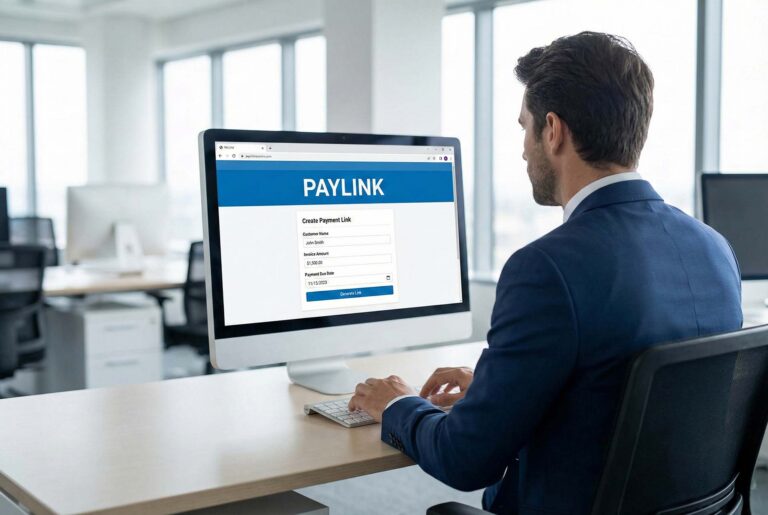
Another popular option is payment links. Payment links are URLs sent to customers that redirect them to a branded checkout or payment page, enabling quick and secure online transactions. They are easy to use and can be integrated with various platforms and channels, making them ideal for businesses of all sizes looking for flexible payment solutions.
Hosted Payment Pages
With hosted payment pages, the customer is redirected away from your website to a secure page hosted by the payment gateway provider. Once the payment is complete, they are redirected back to your site.
- Pros: It reduces your PCI compliance burden because the payment gateway handles the sensitive data. It is often easier to set up.
- Cons: It can disrupt the user journey. The customer leaves your branded environment, which can sometimes reduce conversion rates.
We help you decide if hosted payment pages are the right fit. If you are a smaller business or do not have a dedicated developer, this is often a safe, cost-effective route.
Integrated Payment Gateways
Integrated payment gateways allow customers to enter their payment details directly on your checkout page. The data is sent via an API to the gateway.
- Pros: The customer never leaves your site, providing a seamless payment flow.
- Cons: It requires more rigorous PCI DSS compliance measures and technical setup.
For larger ecommerce businesses where brand consistency is key, we usually recommend integrated solutions. We can guide you through the complex payment processing requirements to ensure you remain compliant while offering a slick user experience.

Security Measures and PCI DSS
Security is non-negotiable. Payment gateways are the first line of defence against online fraud. Any business that accepts card payments must adhere to the Payment Card Industry Data Security Standard (PCI DSS).
PCI DSS compliance ensures that all companies that accept, process, store, or transmit credit card information maintain a secure environment. Payment gateways play a massive role here. A top-tier gateway will offer tokenisation, where card data is replaced with a unique identifier (token). This means you never have to store the actual card numbers on your servers, significantly reducing your risk profile.
We only work with payment gateways that adhere to the highest security measures. When we audit your current setup or propose a new one, we verify that the payment gateway providers have robust fraud detection tools. These tools verify the CVV, checks the address (AVS), and utilises 3D Secure to authenticate the customer’s bank details.
Payment gateways that fail to update their security protocols put your business at risk of data breaches and hefty fines. We take that worry off your plate by vetting every provider we recommend.
Payment Methods: Beyond Debit and Credit Cards
The modern UK consumer expects variety. While debit cards and credit card payments remain dominant, the landscape is shifting. To maximise conversions, your payment gateway must support multiple payment methods.
Digital Wallets
Digital wallets like Apple Pay and Google Pay are becoming essential. They allow customers to pay with a single touch, bypassing the need to type in long card numbers. Payment gateways that integrate Google Pay and Apple Pay seamlessly often see higher conversion rates on mobile devices. We ensure your gateway is ready for the mobile-first world.
Direct Debit and Bank Transfers
For B2B businesses or subscription models, direct debit and bank transfer options are vital. Collecting recurring payments via direct debit can improve cash flow and reduce churn. We can connect you with payment gateways that specialise in recurring payments, ensuring you can collect subscriptions automatically and reliably.
Local and Alternative Methods
Depending on your target market, you might need local payment methods specific to certain countries, or alternative payment methods like Buy Now, Pay Later (BNPL). We analyse your customer demographics. If you sell heavily to a specific region, we find payment gateways that support the preferred local methods, ensuring you do not lose sales at the final hurdle.
Using Multiple Payment Gateways
For businesses experiencing high transaction volumes or serving a diverse customer base, leveraging multiple payment gateways can be a game-changer. By integrating more than one gateway provider, you can offer customers a broader range of payment methods, which not only enhances convenience but also helps reduce cart abandonment and boost conversion rates. This approach is especially valuable for ecommerce businesses that want to accept payments from international customers or need redundancy to ensure uninterrupted payment processing.
However, managing multiple payment gateways requires careful consideration of the associated costs. Each gateway may have its own monthly fees, transaction fees, and setup fees, so it’s important to analyse the total payment gateway cost to avoid unnecessary expenses. Comparing payment gateways on their fee structure, including per transaction fees and monthly costs, will help you optimise your payment processing strategy.
Security is another critical factor. Every gateway provider you use must adhere to strict security measures, including PCI DSS compliance, to protect sensitive payment data and maintain customer trust. It’s also wise to assess the level of customer support each provider offers, as quick resolution of issues is vital when handling complex payment processing across multiple platforms.
Ultimately, using multiple payment gateways can provide flexibility, resilience, and a better customer experience—provided you carefully manage the costs, security requirements, and integration challenges.
Comparing Payment Gateways
Comparing payment gateways is a full-time job. There are dozens of major players in the UK market, and hundreds of smaller ones. When you try to compare them yourself, you are often looking at marketing brochures rather than technical realities.
We look at the metrics that matter:
- Uptime and Reliability: Does the gateway go down during peak trading?
- Settlement Times: How fast does the money move from the acquiring bank to your bank account?
- Support: Is there a UK-based phone number, or just a chatbot?
- Integration: Does it plug easily into your ecommerce platform or accounting software?
Our team conducts a comprehensive audit. We compare payment gateways not just on price, but on value. We find the best payment gateway that balances lower transaction fees with high performance.
High Risk and Complex Sectors
Some businesses fall into categories deemed “high risk” by banks. This could be due to the industry (e.g., travel, gaming, adult, nutraceuticals) or a history of high chargebacks. Many standard payment gateways will reject these applications instantly.
We specialise in high-risk placement. We know which payment gateway providers and acquiring banks have an appetite for specific sectors. If you have been rejected elsewhere, do not despair. We can often secure a high risk merchant account instant approval or fast-track your application through our specialised contacts.
We understand complex payment processing. We can structure your account to mitigate risk, such as negotiating rolling reserves or setting up multiple payment gateways to spread the volume. This redundancy protects your business; if one gateway has an issue, the other keeps your online store running.
The Role of Mobile Payments
Mobile payments are no longer just an optional extra; they are a necessity. A significant portion of online shopping happens on smartphones. Payment gateways must be optimised for mobile screens.
If your checkout page is clunky on a phone, you lose the sale. We prioritise payment gateways that offer responsive designs and native integration with mobile operating systems. Google Pay and Apple Pay are critical here. We ensure your payment gateway supports these mobile payments natively, reducing friction for the user.
Recurring Payments and Subscriptions
The subscription economy is booming. Whether you sell software, subscription boxes, or gym memberships, handling recurring payments efficiently is key to growth.
Standard payment gateways can handle basic recurring billing, but specialised features like dunning management (retrying failed cards) and account updater services (automatically updating expired card details) can save you thousands in lost revenue.
We identify payment gateways with superior recurring payments engines. We can also advise on direct debit solutions for lower-cost recurring collections. We help you build a billing stack that retains customers rather than losing them to failed transactions.
International Expansion
Selling to international customers opens up a world of revenue, but it also introduces complexity. Currency conversion, cross-border fees, and local compliance rules can be difficult to navigate.
Your payment gateway needs to handle multi-currency settlement. This means the customer pays in their currency (e.g., Euros or Dollars), and you receive Sterling in your bank account, or you hold the foreign currency to pay suppliers.
We help you find payment gateways that offer competitive currency conversion rates. Many standard providers charge high FX markups. We negotiate these down. We also ensure your gateway complies with local regulations in the territories you are targeting. International payments should be as smooth as domestic ones, and with our help, they will be.
Currency Conversion
When your business serves international customers, currency conversion becomes a central part of your payment processing strategy. Payment gateways facilitate international transactions by converting foreign currencies into your home currency, but this service often comes with additional fees. These currency conversion fees can be a percentage of the transaction amount or a fixed charge, and they vary significantly between payment gateway providers.
Some gateways, such as Airwallex, are known for offering competitive exchange rates and lower currency conversion fees, making them particularly attractive for businesses with a global reach. When comparing payment gateways, it’s important to look beyond just the transaction fees and consider the total cost of accepting international payments, including any hidden charges related to currency conversion.
Additionally, the best payment gateways for international transactions will support a wide range of payment methods, including local payment methods and alternative payment methods like Google Pay. This ensures that your international customers can pay using their preferred options, which can increase trust and conversion rates.
By carefully evaluating the currency conversion policies and supported payment methods of each gateway, you can minimise costs and maximise your appeal to international customers.
Why We Are Your Ideal Partner
You might be thinking that you can do this research yourself. And technically, you could. But can you access the decision-makers at the major banks? Do you have the data to know if a quote is truly competitive?
We act as your dedicated merchant services broker UK businesses trust. Our service is typically free to you. We receive a commission from the provider, but because of our ethical stance and volume, that commission does not inflate your rate. In fact, our clients almost always pay less than if they went direct.
We are payment gateway experts. We eat, sleep, and breathe this industry. We know that Stripe, PayPal, Worldpay, and others all have their place, but we also know the niche providers that might offer you a better deal or better technology.
Our Process
- Discovery: We listen to your needs. We analyse your current statements to see what you are paying in monthly fees and transaction fees.
- Market Analysis: We take your profile to the market. We speak to payment gateway providers and acquiring banks to find the best fit.
- Negotiation: We use our leverage to drive down the payment gateway cost. We argue for lower transaction fees and waived setup fees.
- Implementation: We assist with the paperwork and integration, ensuring your online payment gateways are set up correctly.
- Ongoing Support: We don’t just disappear. We monitor your rates and ensure the provider sticks to the deal.
Deep Dive: Payment Gateway Integrations
The technical fit is just as important as the financial one. Payment gateways must “talk” to your existing systems.
Ecommerce Platforms
Whether you use Shopify, WooCommerce, Magento, or a custom build, the payment gateway must have a robust plugin or API. We ensure compatibility. We check that the payment gateway supports all the features of your ecommerce platform, such as one-click refunds and inventory sync.
Accounting Software
Reconciling online transactions can be a nightmare for your finance team. We look for payment gateways that integrate with accounting software like Xero, QuickBooks, or Sage. This automation saves hours of manual data entry and reduces errors.
Point of Sale (POS) Integration
If you have physical stores as well as an online store, you need an omnichannel solution. We find payment gateways that connect with your point of sale terminal. This gives you a single view of your customer, regardless of where they buy. Unified reporting means better insights and easier stock management.
The Future of Payment Gateways
The technology behind payment gateways is evolving. We keep our finger on the pulse so you don’t have to.
Open Banking
Open Banking is revolutionising online payments. It allows customers to pay directly from their bank app, bypassing the card networks entirely. This drastically reduces transaction fees and eliminates chargebacks. We are currently helping many clients integrate payment gateways that support Open Banking.
Biometric Authentication
Security is moving beyond passwords. Payment gateways are beginning to support biometric authentication (fingerprint or face ID) on mobile devices and laptops. This reduces fraud while speeding up the checkout. We ensure the payment gateways we recommend are future-proofed for these innovations.
Artificial Intelligence in Fraud Detection
Modern payment gateways use AI to analyse transaction data in real-time. They can spot fraudulent transactions with incredible accuracy, reducing false positives (blocking genuine customers). We prioritise providers that invest heavily in this technology.
Detailed Fee Breakdown
To truly understand the value we bring, we need to look closer at the fee structure.
Interchange ++ vs. Blended Pricing Many payment facilitators offer blended pricing (e.g., a flat 2.9% + 30p). This is simple but often expensive. We typically move our clients to Interchange ++ pricing. This transparent model shows you exactly what the card scheme charges (Interchange), what the scheme charges, and what the acquiring bank charges. This transparency allows us to spot where you are overpaying.
Gateway Fees vs. Acquiring Fees It is important to distinguish between the fee for the gateway (the technology) and the fee for acquiring (the banking). Sometimes these are bundled, sometimes separate. We analyse both. We might find that you have a great acquiring deal but are overpaying for the payment gateway, or vice versa. We optimise both sides of the equation.
Hidden Fees We look for the costs you might miss: authorisation fees, minimum monthly service charges, refusal fees, and PCI non-compliance fees. Payment gateways often hide profit in these lines. We strip them out or negotiate them down.
Understanding Payment Data Flow
Data is the new oil, and payment data is among the most valuable. Payment gateways collect immense amounts of information.
We help you understand who owns this data. If you want to switch providers in the future, can you take your tokenised customer data (for recurring payments) with you? Some payment gateways hold this data hostage. We ensure your contract includes “portability” clauses, so you remain in control of your customer data.
How We Handle Merchant Accounts
A payment gateway is often useless without a merchant account. This is a special type of bank account that holds funds before they are settled to you.
We are experts in setting up merchant services. We connect you with the merchant’s acquiring bank that suits your risk profile and volume. We ensure the merchant account and the payment gateway are perfectly aligned.
For ecommerce businesses, the stability of the merchant account is vital. If the bank freezes your funds due to a misunderstanding of your business model, your cash flow stops. We prevent this by presenting your business correctly to the bank from day one.
Optimising the Checkout Experience
Your checkout page is where the money is made. The payment gateway powers this page.
We advise on the layout and flow. Should you use an embedded frame (iiframe) or a full redirect? How many fields should the customer fill in? We know that every extra second a customer spends on the payment pages increases the chance of them leaving.
We recommend payment gateways that support “guest checkout” and address auto-completion. We also ensure that payment error messages are clear and helpful, rather than cryptic codes that frustrate customers.
Compliance and Regulations
Navigating the regulatory landscape in the UK is complex. PSD2 (Payment Services Directive 2) and SCA (Strong Customer Authentication) have changed how online transactions work.
Payment gateways must now support 3D Secure v2 to comply with SCA. This involves a two-step verification for many online purchases. If your gateway is old, it might cause transactions to fail under these new rules. We ensure all our clients are using payment gateways that are fully PSD2 and SCA compliant, balancing security with user experience.
PCI DSS compliance is another major hurdle. We guide you through the Self-Assessment Questionnaires (SAQs). We find payment gateways that do the heavy lifting for you, often reducing your compliance requirement to the simplest level.
The Importance of Analytics
You cannot improve what you cannot measure. Modern payment gateways offer rich analytics dashboards.
They can tell you:
- Why transactions are failing (e.g., insufficient funds vs. technical error).
- Which payment methods are most popular.
- Your peak trading times.
- The breakdown of domestic vs. international transactions.
We help you interpret this payment information. We show you how to use this data to refine your marketing and operations. We select payment gateways that provide this data freely, rather than hiding it behind a paywall.
Best Payment Gateways
Selecting the best payment gateway for your business is a strategic decision that impacts everything from your bottom line to your customer experience. The right payment gateway will align with your business model, transaction volume, and customer preferences, while offering robust security measures and a transparent fee structure.
Leading payment gateways such as Stripe, PayPal, and Adyen are popular choices for many ecommerce businesses due to their competitive transaction fees, support for multiple payment methods, and strong PCI DSS compliance. These providers also excel in handling recurring payments, debit card payments, and international transactions, making them versatile options for a variety of business needs.
When comparing payment gateways, it’s essential to look at the full picture: setup fees, monthly costs, per transaction fees, and the ease of integration with your ecommerce platform. Consider whether the gateway supports the payment methods your customers prefer, including card payments, alternative payment methods, and local payment methods for international markets. Evaluate the quality of customer support and the gateway’s ability to scale with your business as it grows.
Security should never be compromised—ensure any gateway you consider meets the highest PCI DSS standards and offers advanced fraud detection tools. By thoroughly comparing payment gateways on these criteria, you can confidently choose the best payment gateway for your needs, streamline your payment processing, and deliver a seamless checkout experience for your customers.
Your Next Steps
The world of payment gateways is vast, complex, and filled with potential pitfalls. But it is also filled with opportunity. The right payment gateway can increase your conversion rate, lower your costs, and open up new markets.
You do not have to navigate this alone. We are here to be your guide and your advocate. We handle the payment gateway providers, the banks, and the technical jargon. You focus on running your business.
We invite you to challenge us. Let us look at your current setup. Let us show you where the savings are hiding. Let us find the payment gateway that will power your growth for years to come.
Let Us Analyse Your Options
If you are ready to stop overpaying and start optimising, speak to our team today. We will compare payment gateways across the entire UK market to find your perfect match.
Contact us now to compare card processing fees and secure the best payment gateway for your business.
Frequently Asked Questions
What is the difference between a payment gateway and a merchant account? A payment gateway acts as the technology that captures the data, while the merchant account is the financial account where the funds are held before settlement. You typically need both to accept payments online.
Can you help with high risk industries? Yes. We specialise in finding payment gateways and merchant accounts for high-risk sectors. We can often secure high risk merchant account instant approval depending on the specific vertical and documentation.
Do you charge for your services? Our service is generally free to the merchant. We are paid by the payment gateway providers and banks for introducing the business. This model ensures you get our expertise without an upfront cost, and our volume leverage ensures your rates are lower than going direct.
How long does it take to switch payment gateways? It depends on the complexity of your ecommerce businesses setup. A simple hosted payment page switch can be done in days. Complex payment processing integrations might take a few weeks. We manage the project to ensure zero downtime.
Can I have multiple payment gateways? Yes, and for larger merchants, we recommend it. Having multiple payment gateways provides redundancy. If one goes down, you can route traffic to the other, ensuring you never miss a sale.
What about mobile payments? We prioritise payment gateways that support mobile payments like Apple Pay and Google Pay out of the box. This is essential for modern conversion rates.
How do you handle security? We only work with payment gateways that are Level 1 PCI DSS compliant. We ensure that sensitive data and card data are handled with the highest security measures available.
Technical Appendix: The Mechanics of Processing
For those who want to understand the nuts and bolts, let’s look deeper into how payment gateways work alongside payment processors.
When a transaction process begins, the payment gateway creates a secure tunnel. This tunnel utilises SSL (Secure Socket Layer) or TLS (Transport Layer Security). The card payments information is encrypted at the point of entry (the user’s browser).
The payment gateway sends an ISO 8583 message (the standard for financial transaction card originated messages) to the payment processor. The processor acts as the heavy lifter. It connects to the card networks (Visa/Mastercard).
The payment gateway then waits. It holds the connection open while the banking network talks. This is where latency matters. A poor gateway provider might have slow servers, causing the connection to time out. We test the latency of the payment gateways we recommend to ensure they are lightning-fast.
Once the issuing bank approves the transaction, an authorisation code is generated. The payment gateway grabs this code and hands it back to your website. This confirms the order.
Later in the day (usually overnight), a second process called “Settlement” or “Batching” occurs. The payment gateway sends all the approved authorisation codes from the day to the processor in a batch. The processor then instructs the issuing bank to actually move the money to your merchant’s acquiring bank.
Understanding this difference between “Authorisation” (checking the funds) and “Settlement” (moving the funds) is key. Some payment gateways charge extra for batch processing or delaying settlement. We ensure you have clear visibility on when your money will actually hit your bank account.
Final Thoughts on Payment Gateways
The payment gateway is the silent engine of your online business. When it works well, you don’t notice it. When it fails, it can be catastrophic.
Don’t leave this decision to chance. Don’t just pick the first option your website builder suggests. There is likely a better, cheaper, and more robust alternative available.
We are ready to find it for you. We are the bridge between your business and the complex world of payment processing. We are your partners in profit.
Upload your statement to us today. Let us show you the power of the right payment gateway.
Summary of Benefits Working With Us
- Wholesale Rates: Access to lower transaction fees via our volume leverage.
- Expert Matching: We find the right payment gateway for your specific industry and tech stack.
- Security Focus: We prioritise PCI DSS compliance and fraud detection.
- Time Saving: We handle the paperwork and the technical comparison of payment gateway providers.
- High Risk Access: We open doors that are usually closed to complex sectors.
We are committed to helping UK businesses thrive. Let us handle your payments, so you can handle your growth.