
Streamline Your Payment Processing
Effortlessly manage in-person and online transactions with our comprehensive payment solutions.
Taking online payments: how we help UK businesses accept payments online without overpaying
Want to take payments without overpaying? We help UK businesses accept online payments through cards, bank payments and wallets while reducing transaction fees, contract complexity and avoidable risk.
Key Takeaways
-
We are a Merchant services broker UK businesses use to compare card processing fees, payment gateway providers UK, merchant accounts and payment processors.
-
We use volume leverage with banks and acquirers, so you are not limited to retail rates from one provider.
-
Our service is free to the business owner. The bank or acquirer pays us, and you keep 100% of the savings.
-
We support easy-to-place and high-risk sectors, including businesses declined elsewhere or searching for High risk merchant account instant approval.
-
Upload your latest merchant statement or PSP report, and we will review your online payments costs with no obligation.
Want to accept online payments without overpaying?
Many UK businesses pay too much because they go directly to one bank, one payment service provider, or one payment gateway and accept the first tariff offered.
We help you:
-
accept payments online by credit and debit cards, digital wallets, direct debit and instant bank payments
-
connect payments to your existing business bank account
-
compare gateway services, authorisation fees, monthly fee, chargeback terms and settlement speed
-
reduce avoidable costs on online card payments and in person transactions
-
access our wholesale buying power instead of retail pricing
Transaction fees for online orders usually range from 1.5% to 3.5%, and flat fees for processed transactions typically range from 20p to 30p. For SMEs processing more than £20,000 per month, we often aim to cut total online card processing costs by 10 to 20% where the profile supports it.
Send us your latest statement or PSP report. We will analyse card rates, authorisation fees and payment gateway charges.
How online payments work: the essentials in plain English
Online payments work through four parties involved in online payment processing: the customer, the merchant, the payment processor or acquirer, and the issuing bank.
The flow is simple:
-
The customer enters card details on the ecommerce site. Checkout involves entering card details on the website.
-
The payment gateway encrypts customer data before sending it to processors.
-
Payment processors facilitate communication between merchants and banks.
-
Issuing banks confirm or deny payment requests from merchants in seconds.
-
Funds move into a merchant account, then into the merchant’s bank account, usually within 2 to 3 days.
Online payment processing requires a payment gateway, a payment processor, and a merchant account. The main costs involved are interchange fees, card networks scheme fees, gateway margin and processor margin. Interchange fees typically represent the bulk of transaction costs, and transaction fees vary by card type and transaction location.
We review the full payment system, including payout timing, failed payments, payment request flows and settlement into your bank account. Let us review your current gateway, acquirer and payout structure.
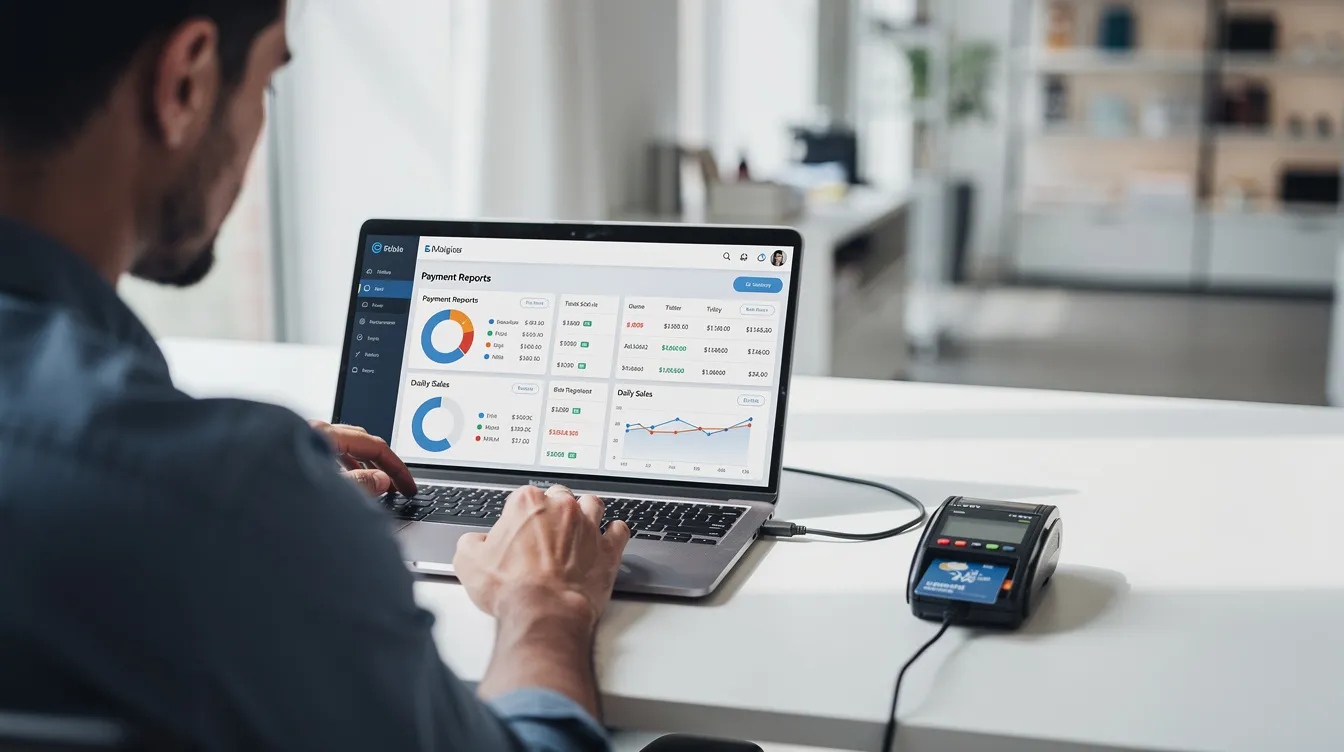
Online payment methods your customers actually use
The right online payment methods increase conversion and reduce abandoned baskets. 87% of customers abandon purchases due to difficult checkout processes, and long checkout processes can significantly reduce conversion rates.
We help you choose from:
-
credit and debit cards
-
apple pay and google pay
-
digital wallets
-
direct debit
-
bank transfers, including direct debits or credit transfers
-
instant bank transfers through Open Banking
-
buy now, pay later
-
payment links and invoicing
40% of consumers outside the US prefer non-card payment methods, while credit cards are the most common online payment method in the US. Buy now, pay later options are popular among younger consumers. We help you balance local payment methods, foreign currencies and a global customer base without adding unnecessary cost.
Speak to us about which payment methods fit your customers, basket size and margin.
Credit and debit cards
Card payments remain essential for any online business that wants to accept card payments and accept online card payments.
Visa, Mastercard and often Amex are usually handled through a payment gateway plus a merchant account, or through an aggregated payment service provider. Platforms like Stripe or PayPal are suitable for standard e-commerce, and e-commerce builders have built-in gateways to facilitate payments.
We compare:
-
credit card payments and debit cards pricing
-
cross-border fees, which add an additional 1% to 2% for international transactions
-
chargeback fees due to disputes, typically £10 to £20
-
premium UK card transactions, where businesses may pay 1.9% plus £0.20
-
international card transactions, which may incur additional fees of 3.25% plus £0.20
We also help improve approval rates with 3D Secure 2.0, which adds an extra verification layer for high-risk transactions. Benchmark your current card rates with us.
Direct debit and bank payments
Direct debit is ideal for subscriptions, memberships, retainers and B2B invoices because it pulls funds from the customer’s bank account on an agreed schedule.
Providers like GoCardless offer lower fees for direct debits, and direct bank payments can reduce transaction costs and improve cash flow. Newer instant bank payments allow customers pay from online banking without card rails, which can reduce chargeback exposure and speed settlement.
Bank transfers can support one off payments, recurring payments and invoices. Ask us whether shifting some payments away from cards could lower your total payment processing costs.
Digital wallets and “buy now, pay later”
Digital wallets include Apple Pay and Google Pay for electronic payments. They use tokenised card data, which can improve security and mobile conversion. Mobile payment methods can improve checkout completion rates.
BNPL can increase conversion and average order values when margins support the cost. We review wallet and BNPL terms before you add another payment service, so integration costs and dispute risk do not erode profit.
Speak to us before adding another wallet or BNPL provider.
Merchant accounts, payment gateways and processors: what you actually need
A merchant account is where online transactions sit before settlement into your business bank account. A payment gateway is the secure online till that collects payment details, encrypts them and sends them for approval. A payment processor handles the behind-the-scenes communication with banks.
Using an all-in-one payment processor simplifies setup for businesses, especially small businesses. A separate merchant account plus gateway can be better for larger volume, higher AOV or more complex risk.
We compare both routes, including accounting software links, inventory tracking, reporting, settlement and fraud controls. Let us map your current set-up and show whether a different combination could cut costs.
Setting up or switching a merchant account
Acquirers usually ask for:
-
legal entity details and business account information
-
trading history and bank statements
-
website URL
-
projected turnover
-
average and maximum transaction values
-
refund and chargeback history
High-risk sectors, including travel, ticketing, CBD, nutraceuticals and long-term subscriptions, face tougher underwriting, higher rates and rolling reserves.
We specialise in preparing strong applications, choosing the right acquirers and reviewing early termination clauses. If you have been declined, speak to us before giving up on taking card payments online.
Choosing and integrating a payment gateway
The right payment gateway should support your payment methods, UK and global card schemes, fraud tools, developer needs, Shopify, WooCommerce or bespoke builds.
Hosted fields use iframe-based payment forms provided by processors. Hosted fields ensure sensitive card data goes directly to secure servers, which reduces compliance burden. Payment links and invoicing can be generated using services like Square, which can suit simple payment request use cases.
Some gateways look cheap but recover margin through cross-border charges, refund fees, recurring billing add-ons and weak reporting. Let us review any fee sheet before you sign.

What it really costs to accept payments online (and how we reduce it)
Online payments are not free, but many UK businesses pay more than needed.
Common statement lines include:
|
Cost line |
Why it matters |
|---|---|
|
Percentage fees |
Main cost on credit or debit card payments |
|
Fixed fees |
Painful for low basket values |
|
Authorisation fees |
Small charges that add up |
|
Monthly gateway fees |
Often overlooked |
|
Chargeback fees |
Chargeback fees are incurred when a payment is reversed by the bank |
|
Refund fees |
Can reduce net margin |
|
Currency mark ups |
Important for international customers |
Chargebacks occur when cardholders dispute a payment with their bank. Fraud detection tools can flag suspicious IPs and buying patterns, while rules-based fraud detection uses strict logic to block transactions. Machine learning models can analyse millions of data points for fraud detection.
We also consider tax complexity. Over 130 countries require indirect tax collection for online sales. 40 US states tax digital goods and services. VAT is commonly used in Europe for indirect tax compliance, while sales tax is the term for indirect tax in the US. Tax rules vary based on product type and location sold.
Request a free cost analysis, and we will show potential savings in pounds per month.
How we use volume leverage to beat “retail” rates
Banks and acquirers give us stronger pricing because we place aggregate volume across many clients.
One merchant may have limited leverage. We negotiate based on the total processing volume we channel to providers. That is why we can often secure materially better effective transaction fees than a direct approach.
Why pay retail rates when you can access our wholesale rates? Ask us to compare the market before accepting a take-it-or-leave-it fee schedule.
Why our service is free for UK businesses
Our service is free because banks, acquirers or payment providers pay us from referral or portfolio budgets. We do not add extra mark ups to your merchant pricing.
We aim to reduce the total cost of accepting payments online. We can explain which providers pay us, and if a better option exists outside our paid panel, we will still discuss it.
There is no consultancy fee, no retainer and no obligation to switch.
High risk and complex businesses: accepting online payments without the stress
Hard-to-place businesses often face repeated declines, high transaction fees, large rolling reserves and sudden account closures.
We work with sectors such as:
-
travel
-
ticketing
-
subscriptions with long terms
-
nutraceuticals
-
CBD
-
gaming
-
some financial services
We know which banks and acquirers are open to specific risk profiles in 2026. We also negotiate settlement times, reserve percentages and reserve release schedules to protect cash flow.
If your merchant account has been rejected or terminated, contact us for realistic options.
Improving approval odds for high risk merchant accounts
A strong application usually needs:
-
financial statements
-
bank statements
-
chargeback history
-
business plans
-
product or service descriptions
-
refund policies
-
evidence of customer support
We may recommend staged approvals, such as lower initial limits that increase after clean processing. Do not submit random applications alone. Let us coordinate a targeted approach.
Managing rolling reserves and cash flow
A rolling reserve is a percentage of card turnover held back by the acquirer to cover future disputes. It can damage cash flow if the percentage is high or the release period is long.
We review current reserve terms and use our relationships to seek lower levels or earlier release where justified. Send us your reserve schedule and current terms.

Our process: from first statement review to live online payments
We keep the process practical:
-
You send merchant statements or PSP reports, website details, products and monthly volumes.
-
We analyse card processing fees, gateway costs, chargebacks and failed payments.
-
We benchmark your costs against our portfolio data.
-
We present suitable acquirers and payment gateway providers, including indicative savings.
-
We handle applications, underwriting questions and technical coordination.
-
Once live, we continue reviewing statements as volumes grow.
Start today by uploading your latest statement for a no-obligation review.
What we need from you to get started
Please send:
-
one to three recent merchant statements or PSP exports
-
company details
-
website URL
-
monthly online turnover
-
current contract terms, if available
For new businesses, forecasts and bank statements can be enough for early conversations. We keep your data confidential and use it only to secure better terms. We can usually begin comparison within two working days.
FAQ: taking online payments with our help
Do I need a separate business bank account before I can accept payments online?
Most UK acquirers and payment processors require a business bank account in the trading name for settlement. We can begin provider selection while the bank account is being opened. Settlement flows to your own bank account, not to us.
Can you help if I am already tied into a payment gateway or merchant account contract?
Yes. We review notice periods, break costs and early termination fees. If switching is not sensible yet, we can sometimes use competitive quotes to improve your current pricing.
How quickly can I start accepting online payments with a new provider?
Simple, low-risk businesses can often go live in a few working days. Higher-risk sectors and bespoke integrations may take one to three weeks because underwriting and technical work take longer.
Is your advice limited to UK payments, or can you help with international customers as well?
Our core focus is UK businesses, but many providers we work with support global online payments, foreign currencies and international card schemes. We can also advise on local payment methods where relevant.
Will switching payment providers disrupt my current online checkout?
We plan changes carefully. New gateway services can often run in test mode first, then go live during a quiet trading period. We work with your developers or platform provider to minimise downtime.
Final word
Taking online payments should not mean accepting high fees, weak contracts or unnecessary complexity. We help you accept payments, process payments, collect payments and pay online securely while protecting margin.
Upload your latest merchant statement or PSP report today. We will compare your costs, explain your options and show where we can help you save.